The Role of Women Artists
From Invisibility to Prominence
By Estela Ferrer Raveiro
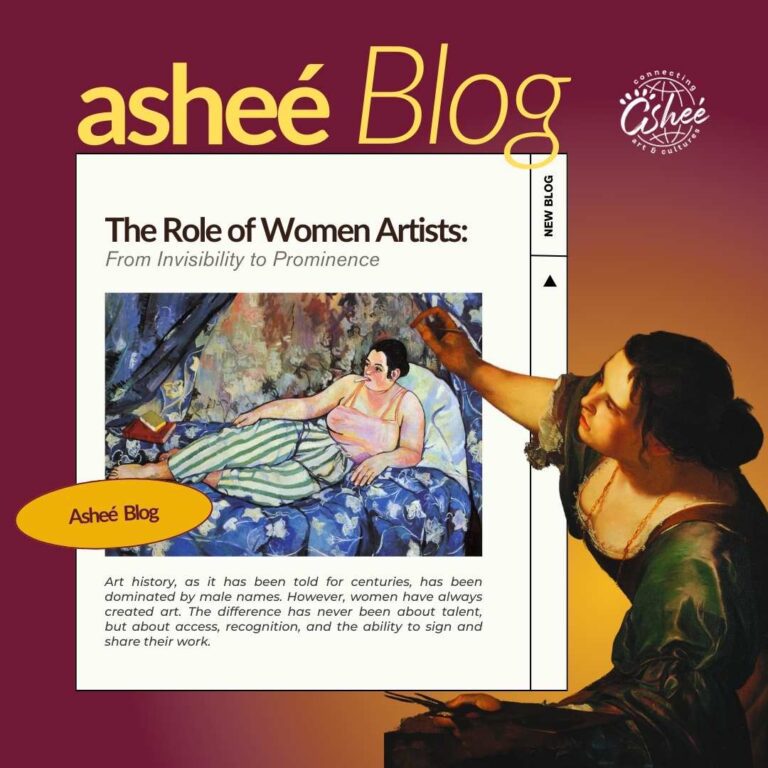
Art history, as it has been told for centuries, has been dominated by male names. However, women have always created art. The difference has never been about talent, but about access, recognition, and the ability to sign and share their work. Exploring the role of women artists from Antiquity to the contemporary era means examining not only artistic styles and works, but also the social structures that shaped their visibility.
Antiquity: Creating Without a Name
In ancient civilizations such as Egypt, Greece, and Rome, women participated in artistic production mainly in areas considered “minor” or domestic, such as weaving, ceramics, and ornamentation. Many of these practices had high aesthetic and symbolic value, but were not recognized as “art” in the classical sense.
Even so, there are notable exceptions. In Classical Greece, Timarete, a painter and daughter of an artist, is mentioned, and in Imperial Rome some women were acknowledged as muses, poets, or artisans. Nevertheless, female authorship was rarely recorded: art made by women was largely anonymous.
The Middle Ages: Art as a Possible Space
During the Middle Ages, convents became one of the few spaces where women could access education and artistic creation. Nuns and religious women contributed to manuscript illumination, sacred music, and writing. Figures such as Hildegard of Bingen stand out not only for their artistic output, but also for their intellectual and spiritual vision. Still, women’s art remained tied to religious and collective contexts. The idea of the “individual genius,” so central to Western art history, was still largely a male privilege.
Renaissance and Baroque: Talent Within Limits
The Renaissance marked major artistic development, but it also reinforced barriers for women. Access to academies, anatomical studies, and professional workshops was almost entirely restricted. Despite this, some women managed to forge artistic careers, often thanks to their family environment.
Artists such as Sofonisba Anguissola and Artemisia Gentileschi demonstrated technical and expressive mastery equal to that of their male contemporaries. However, their careers were marked by the constant need for legitimacy and by interpretations of their work filtered through their gender.
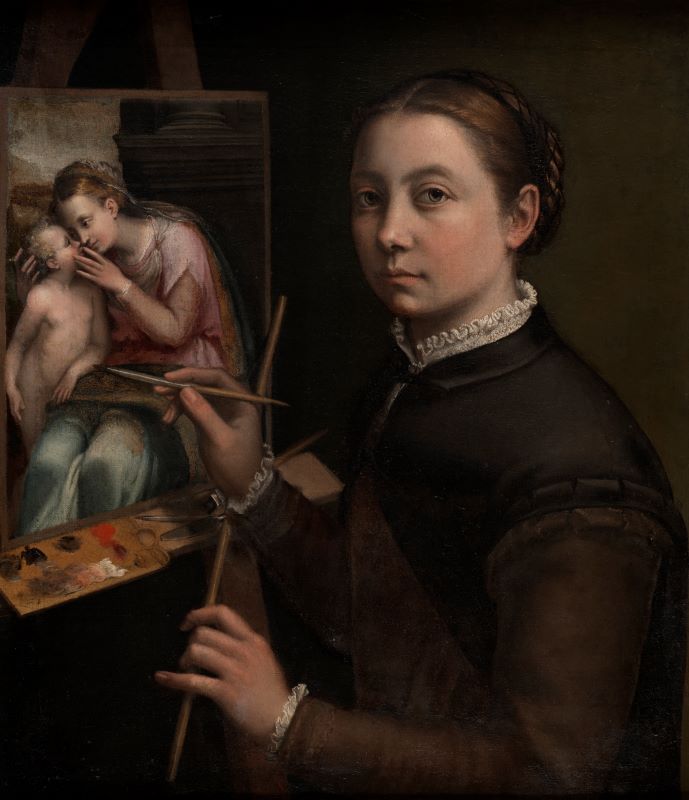
Sofonisba Anguissola
Self-Portrait with Easel, 1556
Oil on canvas, 66 × 57 cm.
Lancut Castle, Poland
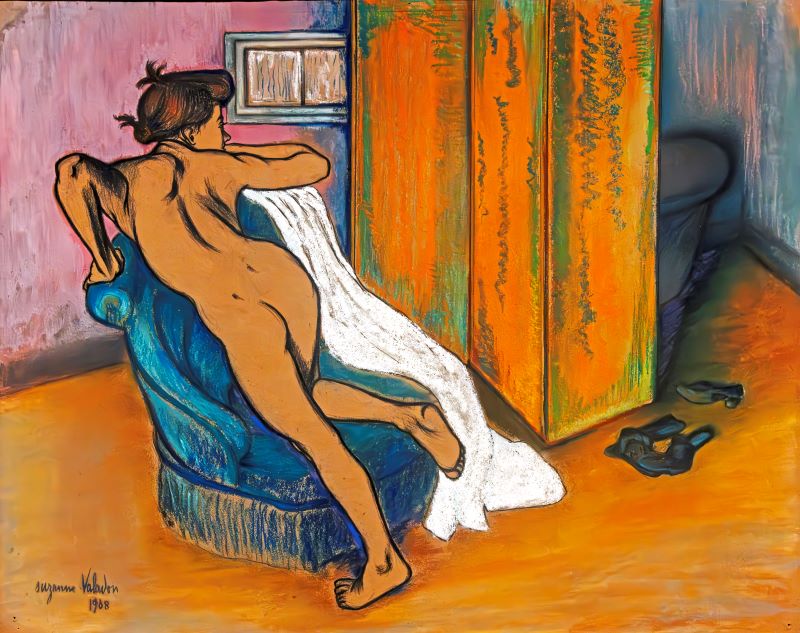
Suzanne Valadon
After the bath, (No Date)
Museum of the Petit Palais (Geneva)
19th Century and Early 20th Century: Breaking the Silence
With the arrival of modernity, women began to demand greater presence in public and cultural life. Although art academies remained exclusionary, more women artists participated in artistic movements and exhibitions. Figures such as Berthe Morisot, Mary Cassatt, and Suzanne Valadon were central to Impressionism and Post-Impressionism, though for a long time their work was considered secondary. At the same time, art became a tool to question gender roles and female identity.
Contemporary Art: Visibility, Critique, and Diversity
In contemporary art, women artists have achieved unprecedented visibility. The goal is no longer simply to occupy a place in art history, but to rewrite it. Artists such as Frida Kahlo, Louise Bourgeois, Cindy Sherman, and Yayoi Kusama have used their work to explore the body, identity, memory, power, and female experience from multiple perspectives.
Moreover, feminism has driven a critical reassessment of museums, collections, and artistic narratives, exposing historical absences and inequalities. Today, the woman artist is no longer an exception, but a plural and diverse voice in dialogue with her time.
Conclusion
Art history cannot be understood without the women who have shaped it, often from the margins. Recognizing their role is not only an act of historical justice, but also a way to enrich our understanding of art and culture. From anonymity to recognition, from silence to self- expression, women artists have moved from invisibility to indispensability.