Color in Art
Color has been much more than an aesthetic resource...
By Estela Ferrer Raveiro
Throughout the history of art, color has been much more than an aesthetic resource: it has
functioned as a symbolic, emotional, and cultural language. Its treatment has changed according
to historical contexts, belief systems, technical advances, and the expressive intentions of each period.
In prehistoric art and early civilizations, color had a strong symbolic and ritual character. Natural
pigments such as ochre, black, and white were used to represent life, death, the sacred, or power.
In Egyptian art, for example, colors were strictly codified and were not meant to achieve realism,
but to convey eternal ideas and hierarchies.
During Classical Antiquity, color began to interact with form and proportion, although for centuries the mistaken idea of pure white sculpture prevailed. In the Middle Ages, color regained its symbolic value: the intense golds, blues, and reds of stained glass and illuminated manuscripts sought to create a spiritual experience rather than a naturalistic representation.
With the Renaissance, color was placed at the service of the illusion of reality. Light, perspective, and chromatic harmony were essential to constructing believable images. Later, in the Baroque period, color became dramatic and contrast-driven, intensifying emotion and tension through chiaroscuro and deep palettes.
A major turning point came with modernity. The Impressionists freed color from its descriptive role and turned it into a tool for capturing light and subjective perception. Later, the 20th century avant-gardes—such as Fauvism, Expressionism, and Abstraction—pushed color into an autonomous realm, capable of conveying emotional states, ideas, and concepts without the need to represent reality.
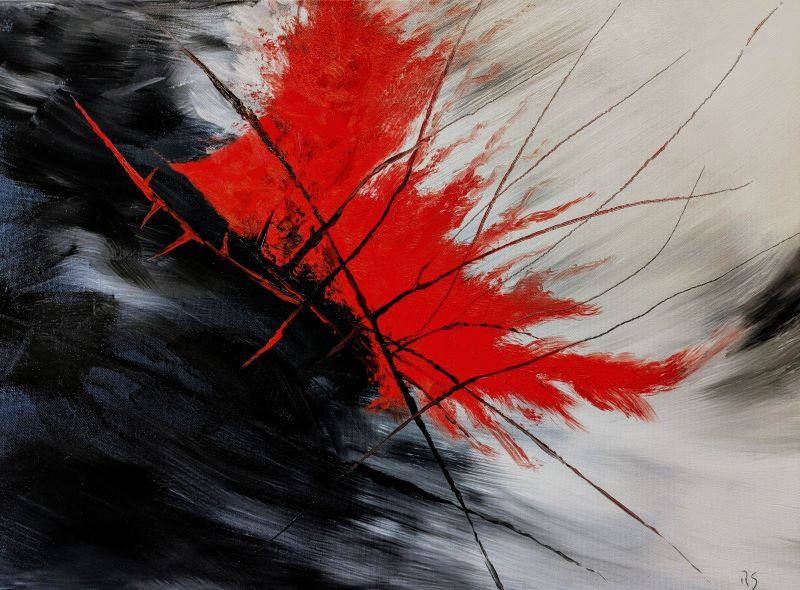
Robert Schwander
Thorn Red, 2025
Oil on canvas
50 x 70 cm
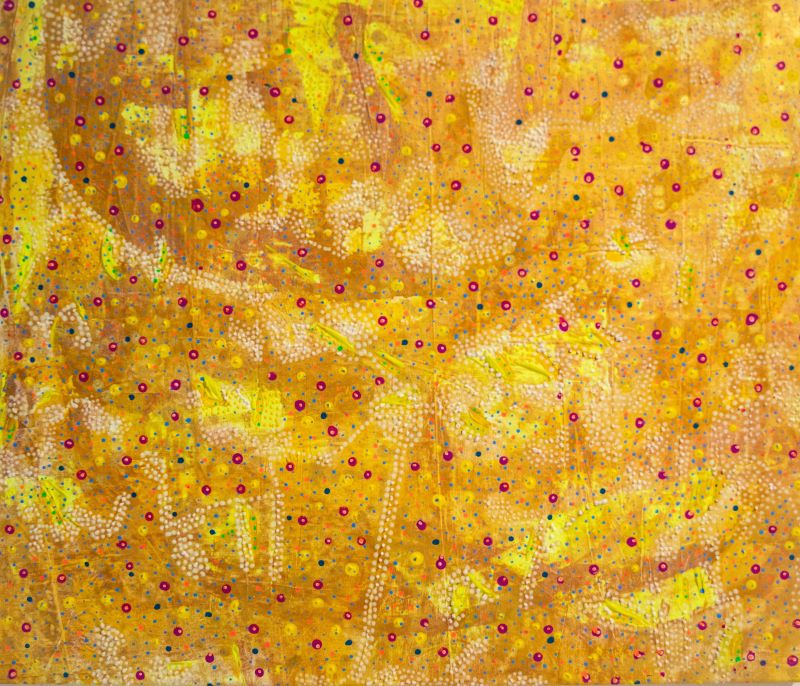
Domecq Arteaga
Frühlingsherz, 2025
Acrylic on canvas
70 x 83 cm
Color in the Current Exhibition
The current exhibition engages in dialogue with this entire history and reinterprets it through a contemporary lens. Here, color does not merely accompany form but becomes the protagonist: it structures space, generates atmospheres, and activates the viewer’s experience. The works explore color as matter, as energy, and as discourse, inviting us to feel before we rationally understand.
In this journey, color acts as a bridge between tradition and innovation. It resonates with its historical weight while simultaneously breaking free from fixed rules, opening itself to personal and sensory interpretations. The exhibition reminds us that color remains one of art’s most powerful tools for provoking emotion, reflection, and connection.
Thus, far from being a decorative element, color presents itself as a living language, capable of adapting to each era and continuing to transform the way we see the world.