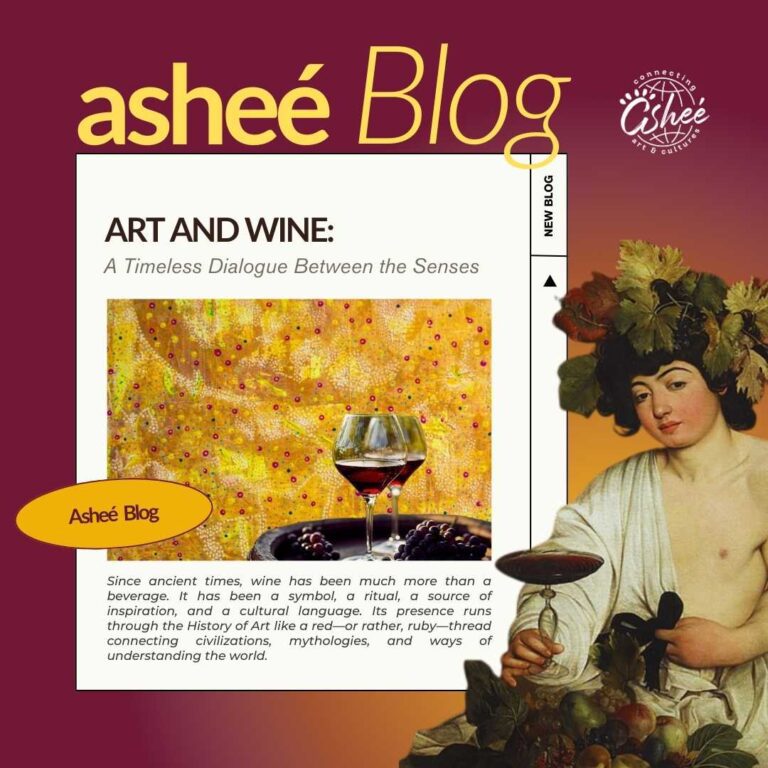
Since ancient times, wine has been much more than a beverage. It has been a symbol, a ritual, a source of inspiration, and a cultural language. Its presence runs through the History of Art like a red—or rather, ruby—thread connecting civilizations, mythologies, and ways of understanding the world. To speak about art and wine is, in essence, to speak about a profound relationship between creation, pleasure, and community.
In Classical Antiquity, wine found its ultimate embodiment in Bacchus (Dionysus), the god of wine, ecstasy, and fertility. His iconography is a celebration of the senses: bodies in motion, overflowing gazes, scenes of feasting and freedom. Greek and Roman artists understood wine as a gateway to both the divine and the human—a substance capable of dissolving boundaries and awakening creativity. It is no coincidence that Bacchus remained a recurring figure for centuries, reappearing with great force during the Renaissance and Baroque periods in the works of artists such as Caravaggio, Titian, and Velázquez.
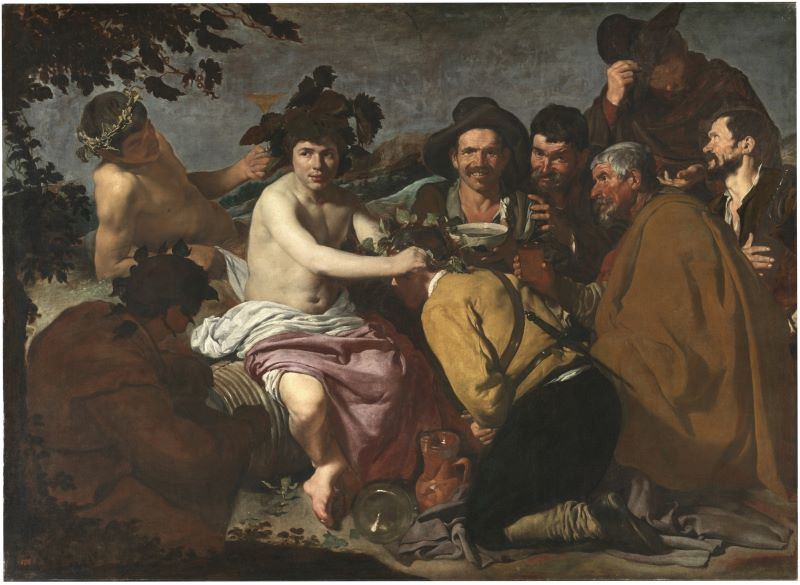
Diego Velázquez
The Drunkards or The Triumph of Bacchus, 1628–1629
Oil on canvas, 165 × 225 cm
Museo Nacional del Prado, Madrid, Spain
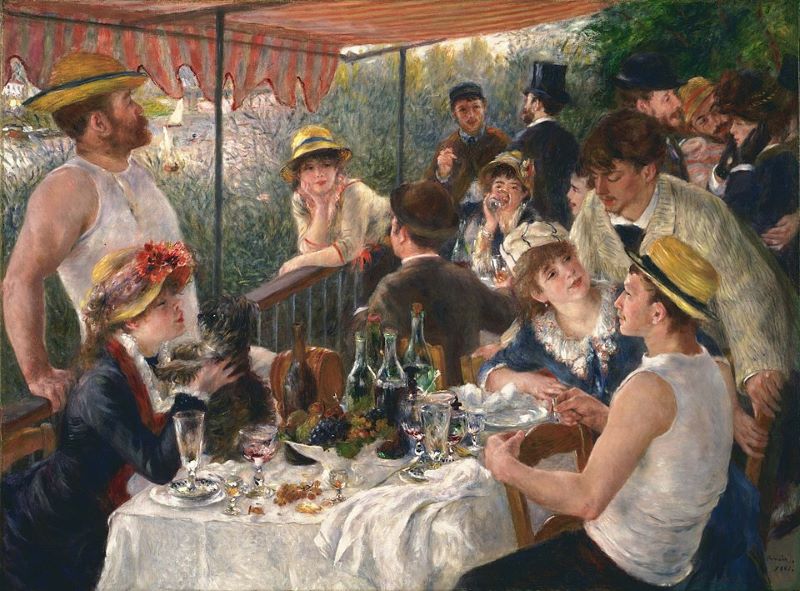
Renoir Pierre-Auguste
Luncheon of the Boating Party, 1881
Oil on canvas, 129.5 × 172.7 cm
The Phillips Collection, Washington, D.C., United States
During the Middle Ages, although artistic focus shifted toward spirituality, wine retained its symbolic importance, especially in connection with Christian ritual. Later, in Flemish and Dutch painting, it reemerged in everyday scenes: taverns, family tables, still lifes. In these works, wine speaks of social status, morality, celebration, or excess, depending on the context. Every painted glass is, ultimately, a portrait of its time.
With the arrival of modernity, wine freed itself from strict symbolic meanings and became part of contemporary life. Impressionist artists integrated it into urban scenes and intimate moments; the avant-gardes reinterpreted it through form, color, and abstraction. In modern and contemporary art, wine is no longer merely represented—it is experienced. It becomes concept, performance, and an excuse for encounter and dialogue.
Today, current trends aim to dissolve boundaries between disciplines. Art, gastronomy, and wine converge in multisensory experiences where the viewer is no longer passive. Exhibitions that include tastings, installations that play with aromas, colors that evoke tasting notes, artists who work directly with barrels, bottles, or vineyard landscapes. Wine brings time, territory, and memory; art brings critical perspective and emotion. Together, they create fertile ground for conversation and conscious enjoyment.
Linking these two worlds within the framework of an art exhibition is not only an aesthetic choice, but also a cultural one. Wine invites us to slow down, to observe more carefully, to share impressions. It breaks the ice, awakens the senses, and encourages dialogue. In this context, the artwork is perceived differently: more approachable, more human, more alive. The tasting thus becomes a natural extension of the artistic experience.
Because in the end, both art and wine speak of the same thing: the desire to understand and
celebrate life.
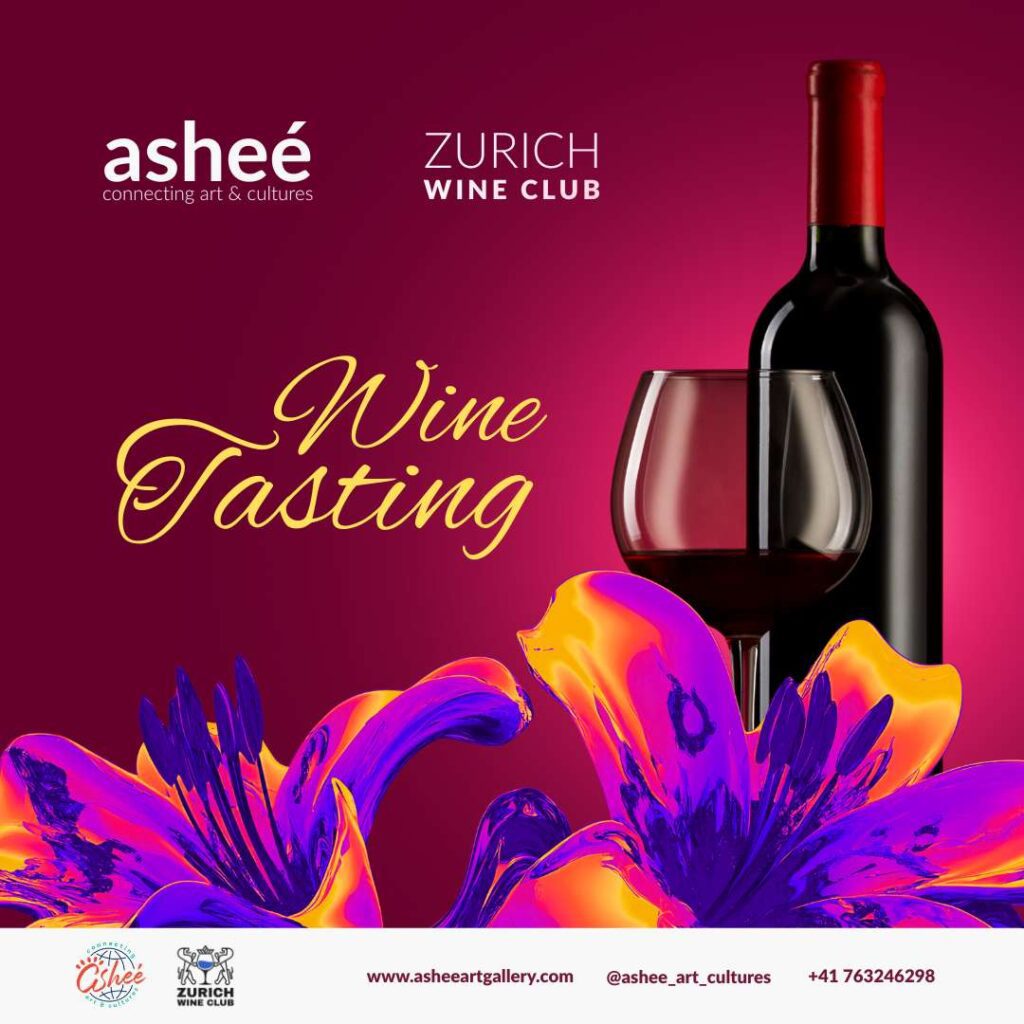

Wine Tasting – “Chronicles of Color” Exhibition
Date: Thursday, February 19
Time: 18:00 – 20:30
Location: Regus West Zürich, Badenerstrasse 549, 8048 Zürich, 1st Floor