Author name: katyperezkp1983@gmail.com

Sin categoría

The Role of Women Artists: From Invisibility to Prominence

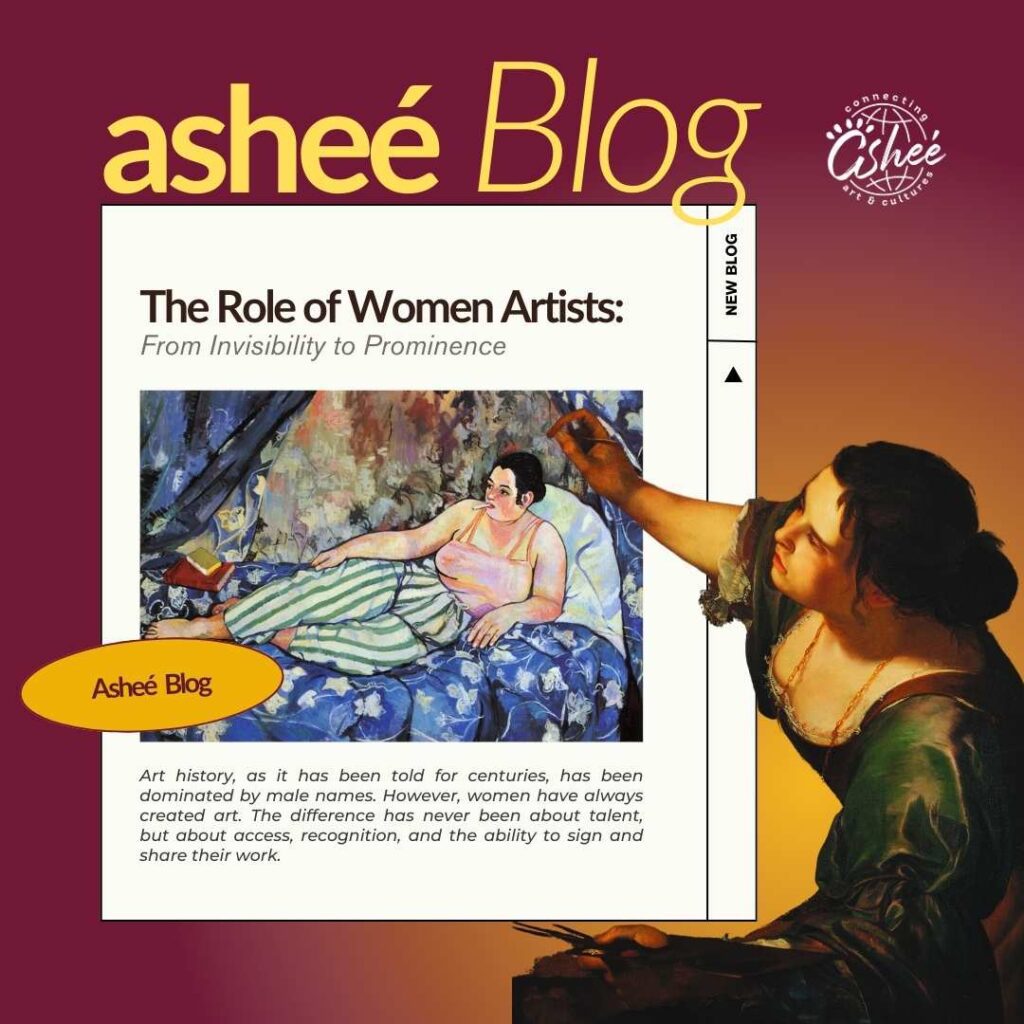
The Role of Women Artists From Invisibility to Prominence By Estela Ferrer Raveiro Art history, as it has been told for centuries, has been dominated by male names. However, women have always created art. The difference has never been about talent, but about access, recognition, and the ability to sign and share their work. Exploring the role of women artists from Antiquity to the contemporary era means examining not only artistic styles and works, but also the social structures that shaped their visibility. Antiquity: Creating Without a Name In ancient civilizations such as Egypt, Greece, and Rome, women participated in artistic production mainly in areas considered “minor” or domestic, such as weaving, ceramics, and ornamentation. Many of these practices had high aesthetic and symbolic value, but were not recognized as “art” in the classical sense. Even so, there are notable exceptions. In Classical Greece, Timarete, a painter and daughter of an artist, is mentioned, and in Imperial Rome some women were acknowledged as muses, poets, or artisans. Nevertheless, female authorship was rarely recorded: art made by women was largely anonymous. The Middle Ages: Art as a Possible Space During the Middle Ages, convents became one of the few spaces where women could access education and artistic creation. Nuns and religious women contributed to manuscript illumination, sacred music, and writing. Figures such as Hildegard of Bingen stand out not only for their artistic output, but also for their intellectual and spiritual vision. Still, women’s art remained tied to religious and collective contexts. The idea of the “individual genius,” so central to Western art history, was still largely a male privilege. Renaissance and Baroque: Talent Within Limits The Renaissance marked major artistic development, but it also reinforced barriers for women. Access to academies, anatomical studies, and professional workshops was almost entirely restricted. Despite this, some women managed to forge artistic careers, often thanks to their family environment. Artists such as Sofonisba Anguissola and Artemisia Gentileschi demonstrated technical and expressive mastery equal to that of their male contemporaries. However, their careers were marked by the constant need for legitimacy and by interpretations of their work filtered through their gender. Sofonisba AnguissolaSelf-Portrait with Easel, 1556Oil on canvas, 66 × 57 cm.Lancut Castle, Poland Suzanne ValadonAfter the bath, (No Date)Museum of the Petit Palais (Geneva) 19th Century and Early 20th Century: Breaking the Silence With the arrival of modernity, women began to demand greater presence in public and cultural life. Although art academies remained exclusionary, more women artists participated in artistic movements and exhibitions. Figures such as Berthe Morisot, Mary Cassatt, and Suzanne Valadon were central to Impressionism and Post-Impressionism, though for a long time their work was considered secondary. At the same time, art became a tool to question gender roles and female identity. Contemporary Art: Visibility, Critique, and Diversity In contemporary art, women artists have achieved unprecedented visibility. The goal is no longer simply to occupy a place in art history, but to rewrite it. Artists such as Frida Kahlo, Louise Bourgeois, Cindy Sherman, and Yayoi Kusama have used their work to explore the body, identity, memory, power, and female experience from multiple perspectives. Moreover, feminism has driven a critical reassessment of museums, collections, and artistic narratives, exposing historical absences and inequalities. Today, the woman artist is no longer an exception, but a plural and diverse voice in dialogue with her time. Conclusion Art history cannot be understood without the women who have shaped it, often from the margins. Recognizing their role is not only an act of historical justice, but also a way to enrich our understanding of art and culture. From anonymity to recognition, from silence to self- expression, women artists have moved from invisibility to indispensability.
Sin categoría

Art and Wine: a Timeless Dialogue Between the Senses

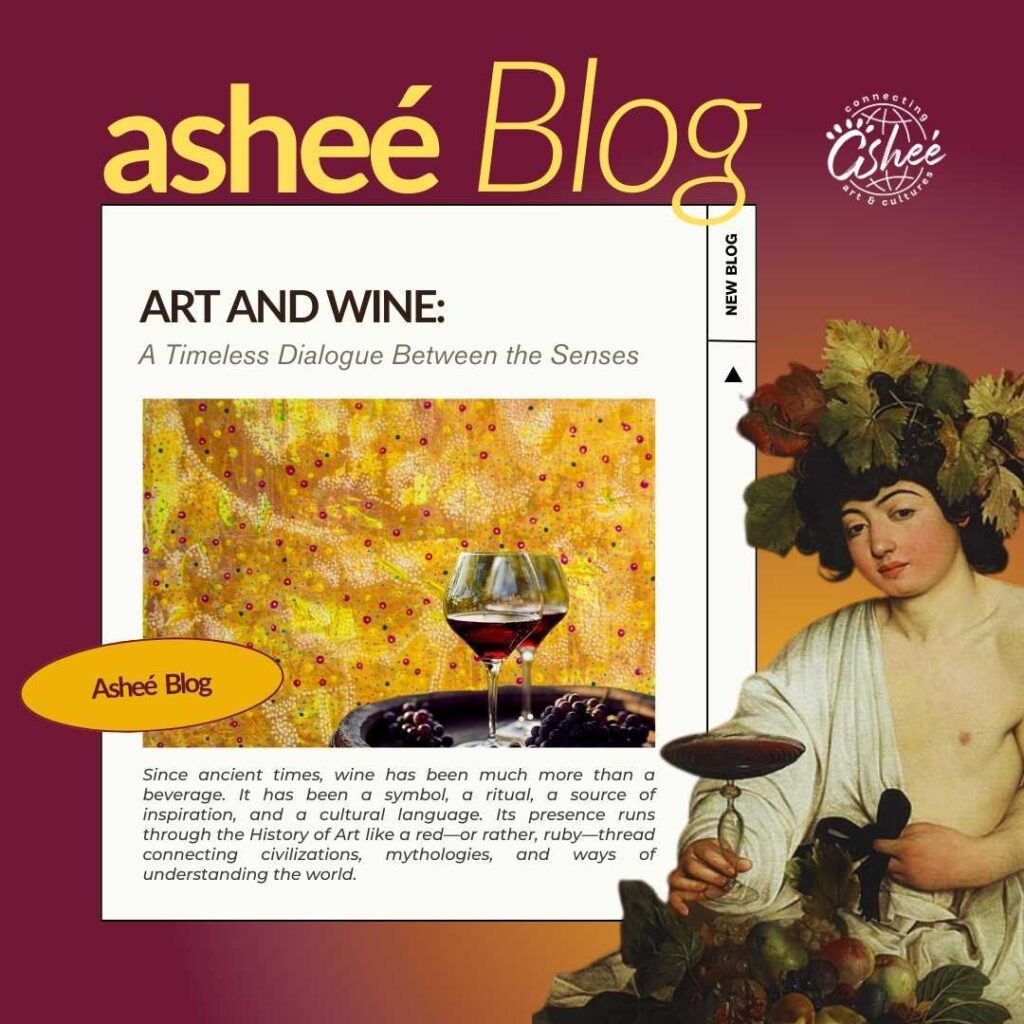
Art and wine A Timeless Dialogue Between the Senses By Estela Ferrer Raveiro Events Since ancient times, wine has been much more than a beverage. It has been a symbol, a ritual, a source of inspiration, and a cultural language. Its presence runs through the History of Art like a red—or rather, ruby—thread connecting civilizations, mythologies, and ways of understanding the world. To speak about art and wine is, in essence, to speak about a profound relationship between creation, pleasure, and community. In Classical Antiquity, wine found its ultimate embodiment in Bacchus (Dionysus), the god of wine, ecstasy, and fertility. His iconography is a celebration of the senses: bodies in motion, overflowing gazes, scenes of feasting and freedom. Greek and Roman artists understood wine as a gateway to both the divine and the human—a substance capable of dissolving boundaries and awakening creativity. It is no coincidence that Bacchus remained a recurring figure for centuries, reappearing with great force during the Renaissance and Baroque periods in the works of artists such as Caravaggio, Titian, and Velázquez. Diego VelázquezThe Drunkards or The Triumph of Bacchus, 1628–1629Oil on canvas, 165 × 225 cmMuseo Nacional del Prado, Madrid, Spain Renoir Pierre-AugusteLuncheon of the Boating Party, 1881Oil on canvas, 129.5 × 172.7 cmThe Phillips Collection, Washington, D.C., United States During the Middle Ages, although artistic focus shifted toward spirituality, wine retained its symbolic importance, especially in connection with Christian ritual. Later, in Flemish and Dutch painting, it reemerged in everyday scenes: taverns, family tables, still lifes. In these works, wine speaks of social status, morality, celebration, or excess, depending on the context. Every painted glass is, ultimately, a portrait of its time. With the arrival of modernity, wine freed itself from strict symbolic meanings and became part of contemporary life. Impressionist artists integrated it into urban scenes and intimate moments; the avant-gardes reinterpreted it through form, color, and abstraction. In modern and contemporary art, wine is no longer merely represented—it is experienced. It becomes concept, performance, and an excuse for encounter and dialogue. Today, current trends aim to dissolve boundaries between disciplines. Art, gastronomy, and wine converge in multisensory experiences where the viewer is no longer passive. Exhibitions that include tastings, installations that play with aromas, colors that evoke tasting notes, artists who work directly with barrels, bottles, or vineyard landscapes. Wine brings time, territory, and memory; art brings critical perspective and emotion. Together, they create fertile ground for conversation and conscious enjoyment. Linking these two worlds within the framework of an art exhibition is not only an aesthetic choice, but also a cultural one. Wine invites us to slow down, to observe more carefully, to share impressions. It breaks the ice, awakens the senses, and encourages dialogue. In this context, the artwork is perceived differently: more approachable, more human, more alive. The tasting thus becomes a natural extension of the artistic experience. Because in the end, both art and wine speak of the same thing: the desire to understand andcelebrate life. Wine Tasting – “Chronicles of Color” Exhibition Date: Thursday, February 19Time: 18:00 – 20:30Location: Regus West Zürich, Badenerstrasse 549, 8048 Zürich, 1st Floor

Sin categoría

Color in Art

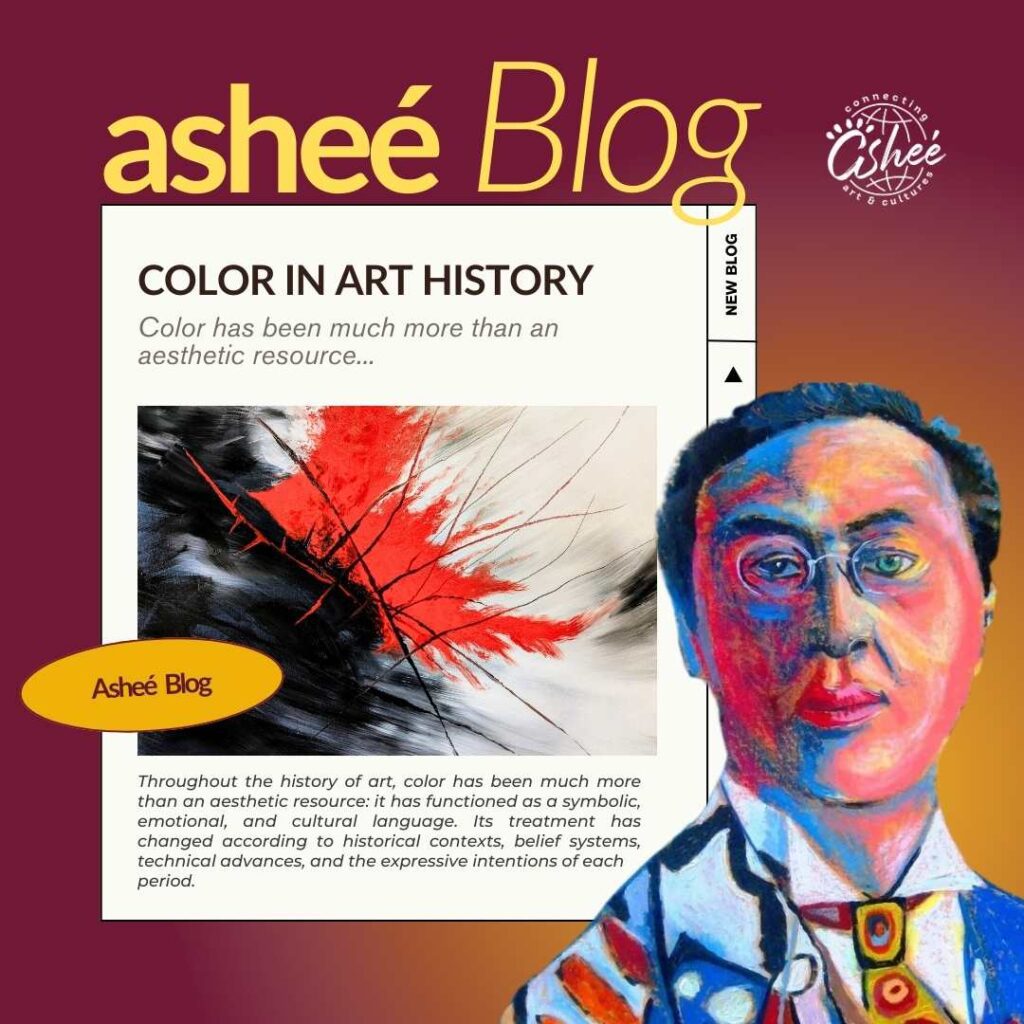
Color in Art Color has been much more than an aesthetic resource… By Estela Ferrer Raveiro asheé gallery Throughout the history of art, color has been much more than an aesthetic resource: it hasfunctioned as a symbolic, emotional, and cultural language. Its treatment has changed accordingto historical contexts, belief systems, technical advances, and the expressive intentions of each period. In prehistoric art and early civilizations, color had a strong symbolic and ritual character. Naturalpigments such as ochre, black, and white were used to represent life, death, the sacred, or power.In Egyptian art, for example, colors were strictly codified and were not meant to achieve realism,but to convey eternal ideas and hierarchies. During Classical Antiquity, color began to interact with form and proportion, although for centuries the mistaken idea of pure white sculpture prevailed. In the Middle Ages, color regained its symbolic value: the intense golds, blues, and reds of stained glass and illuminated manuscripts sought to create a spiritual experience rather than a naturalistic representation. With the Renaissance, color was placed at the service of the illusion of reality. Light, perspective, and chromatic harmony were essential to constructing believable images. Later, in the Baroque period, color became dramatic and contrast-driven, intensifying emotion and tension through chiaroscuro and deep palettes. A major turning point came with modernity. The Impressionists freed color from its descriptive role and turned it into a tool for capturing light and subjective perception. Later, the 20th century avant-gardes—such as Fauvism, Expressionism, and Abstraction—pushed color into an autonomous realm, capable of conveying emotional states, ideas, and concepts without the need to represent reality. Robert SchwanderThorn Red, 2025Oil on canvas50 x 70 cm Domecq ArteagaFrühlingsherz, 2025Acrylic on canvas70 x 83 cm Color in the Current Exhibition The current exhibition engages in dialogue with this entire history and reinterprets it through a contemporary lens. Here, color does not merely accompany form but becomes the protagonist: it structures space, generates atmospheres, and activates the viewer’s experience. The works explore color as matter, as energy, and as discourse, inviting us to feel before we rationally understand. In this journey, color acts as a bridge between tradition and innovation. It resonates with its historical weight while simultaneously breaking free from fixed rules, opening itself to personal and sensory interpretations. The exhibition reminds us that color remains one of art’s most powerful tools for provoking emotion, reflection, and connection. Thus, far from being a decorative element, color presents itself as a living language, capable of adapting to each era and continuing to transform the way we see the world.

Sin categoría

Meet the Artists in Zurich | The Mind Behind the Artwork

Meet the Artists in Zurich | The Mind Behind the Artwork Asheé Art Gallery By Katherine Pérez events Ever wondered what the artist was thinking? On November 27th, experience a unique artist talk. Meet the creators from our exhibition, discover their stories, and engage in a dialogue about art. Free admission. Beyond the Canvas: Discover the Voice Behind the Art in a Unique Artist Meetup Art is, above all, a dialogue. A painting, a sculpture, or an installation speaks to us from the wall, evoking emotions, questions, and sometimes, unexpected answers. But what if you could sit down with the one who created that piece and ask them: “What did you truly mean to say?” At Asheé Art Gallery, we believe the artistic experience doesn’t end with contemplation. It is enriched by conversation, by human connection. That’s why we are delighted to invite you to an exceptional event: an intimate meetup and talk with all the artists from our current group exhibition. It will be held on November 27th at our venue in Zurich. Honys TorresLuis Donald de Disney, 2021Acrylic on canvas90 x 90 cm Tina BehnstedtAudrey and FlowerMixed media, collage printed oncanvas with acrylic.60 x 80 cm. The Mystery Solved: Intention vs. Interpretation One of the most fascinating dynamics in art is the gap—sometimes small, sometimes a chasm—between the artist’s intention and the audience’s interpretation. You, as the viewer, bring your own history, experiences, and sensibilities to the artwork, creating a unique and personal meaning. But how does that compare to the initial spark that ignited the creation in the artist’s mind? At this meetup, you will have the rare opportunity to: Hear first-hand the stories, creative processes, and concepts that shaped the works you admire in our gallery. Uncover the “why”: Why that color palette? Why that material? What personal or social experience was the artist aiming to capture? Understand the technique: Discover the challenges and innovative solutions behind each piece. A Live Dialogue: When Art Comes to Life Reading a description on a plaque is one thing. Hearing the passion in the artist’s voice is another. This event will not be a formal lecture, but an open and dynamic conversation. A space where you can: Ask your questions: Is there something you’ve always wanted to ask an artist? Now is your moment. Break the invisible barrier between the creator and the viewer. Contrast perspectives: Share your own interpretation and discover if the artist envisioned it similarly or if they surprise you with a completely different viewpoint. This is where art truly comes alive, at the intersection of different gazes. Connect with the art community: Meet other art lovers, collectors, and critics. Enrich yourself with a vibrant and stimulating exchange of ideas. A Unique and Unrepeatable Opportunity Gathering the entire roster of artists from a group exhibition is a rare occasion. It is the perfect moment to deepen your understanding of contemporary art, to invest in your personal culture, and perhaps, to find that emotional connection with a work that transforms it from a decorative object into a meaningful piece for your life or collection. Don’t let others tell you about it. Experience it fully. Event: Artist Meetup and Talk with ArtistsDate: Thursday, November 27, 2025Time: 19:00 – 21:00Location: Asheé Art Gallery, Regus 1st. Floor. Badenerstrasse 549, CH-8048 Zürich WestAdmission: Free. Limited capacity. PangoDe la serie Casi felices, 2024 Mixed technique on fabric Federico GuerreroNatural Madness, 2019Acrylic on canvas50 x 70 cm.

Sin categoría

Emerging Latin American Artists You Should Follow Now

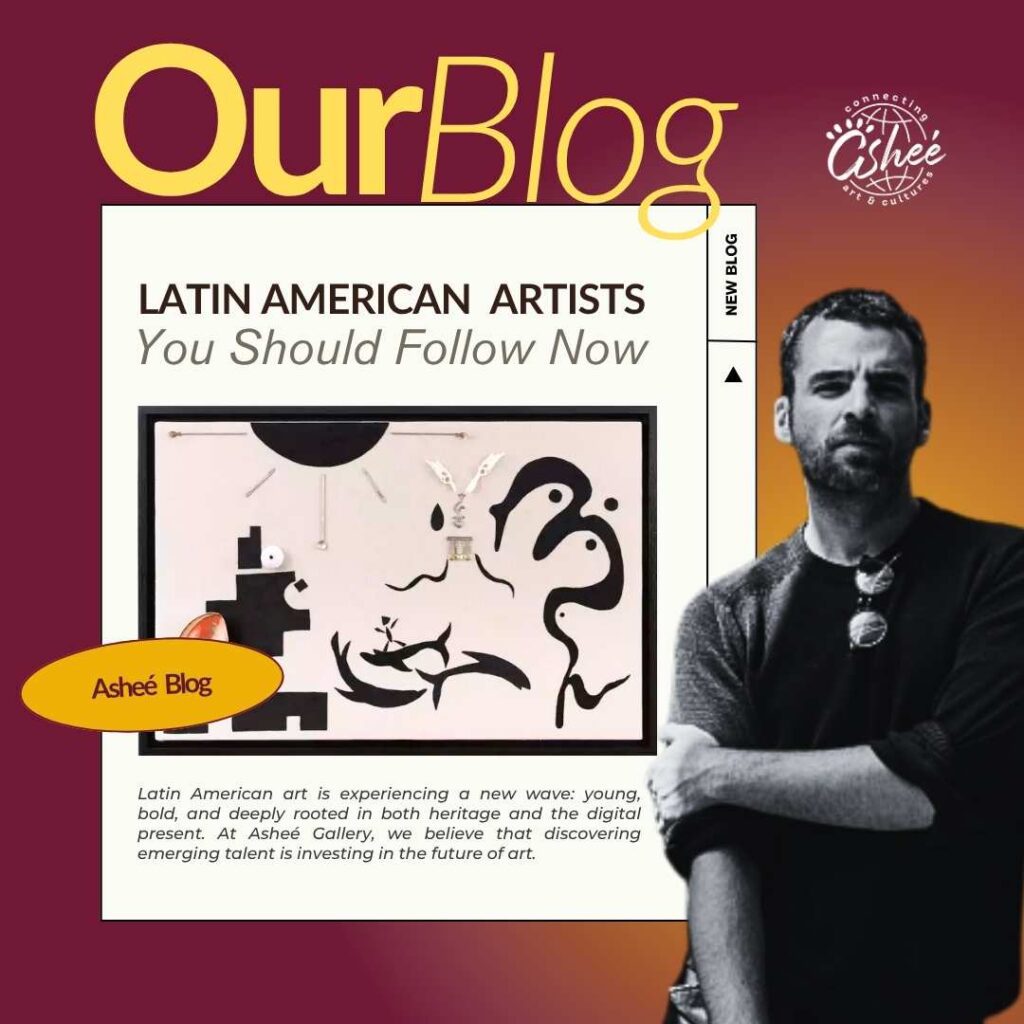
Emerging Latin American Artists You Should Follow Now By Estela Ferrer Raveiro Asheé Art Gallery Latin American art is experiencing a new wave: young, bold, and deeply rooted in both heritage and the digital present. At Asheé Gallery, we believe that discovering emerging talent is investing in the future of art. Here are five names redefining the scene: María Conejo (Mexico) – With an intimate and powerful line, she explores the relationship between body, identity, and contemporary femininity. Andrés Pereira Paz (Bolivia) – Fuses Andean mythology and political critique in installations that dismantle colonial narratives. Daniela Ortiz (Peru/Spain) – Her work blends activism and performance to expose structures of power and exclusion. Adriana Minoliti (Argentina) – Through digital painting, she creates queer, geometric worlds where color becomes language. Diego Machado (Brazil) – Between urban muralism and digital graphics, his work refreshes Brazilian modernism with a contemporary twist. Different in technique but united in intensity, these artists confirm that Latin America remains an inexhaustible source of visual innovation. Andrés Pereira Misterios: Amaru (navegar por múltiples dimensiones), 2022Tapestry embroidered with objects from the workshops ‘Los Castillo, Joyas de Tiahuanacu, Salvador Terán and others’120 x 150 cm. Adriana MinolitiTríptico, 2010Oil, acrylic and enamel on canvas210 x 70 cm each one. Surprising Similarities Between Pre-Columbian Art and Contemporary Swiss Design At first glance, they may seem worlds apart—one ancient, the other minimalist—but Pre-Columbian art and Swiss design share more than you might think: The power of the symbol: From Andean textiles to Bauhaus or Helvetica logos, geometric form conveys pure meaning. The pursuit of balance: Maya or Moche ceramics show mathematical precision comparable to Swiss composition—nothing is missing, nothing is superfluous. Aesthetic functionality: In both cases, art is not mere ornament but an extension of daily life—be it a ceremonial vessel or a typographic poster. This affinity reveals that cultural distance can be deceiving: beauty, when born of coherence, speaks a universal language. The Colors of Latin America and Their Meaning in Art Color in Latin American art is not mere decoration—it is language, emotion, and history. From Frida Kahlo’s deep blues to Cruz-Diez’s vibrant yellows, the continent’s palette tells centuries of blending and resistance. Red: passion, blood, life—but also protest. Blue: spirituality, the sea, introspection. Green: enduring nature, a symbol of hope. Yellow: light, energy, tropical vitality. Artists across the region use color as a manifesto: each stroke evokes identity, memory, and a desire for transformation. At Asheé Gallery, we celebrate this chromatic force that makes Latin American art a full sensory experience—capable of illuminating any space.

Sin categoría

Cultural Connection: Latin America in Zurich

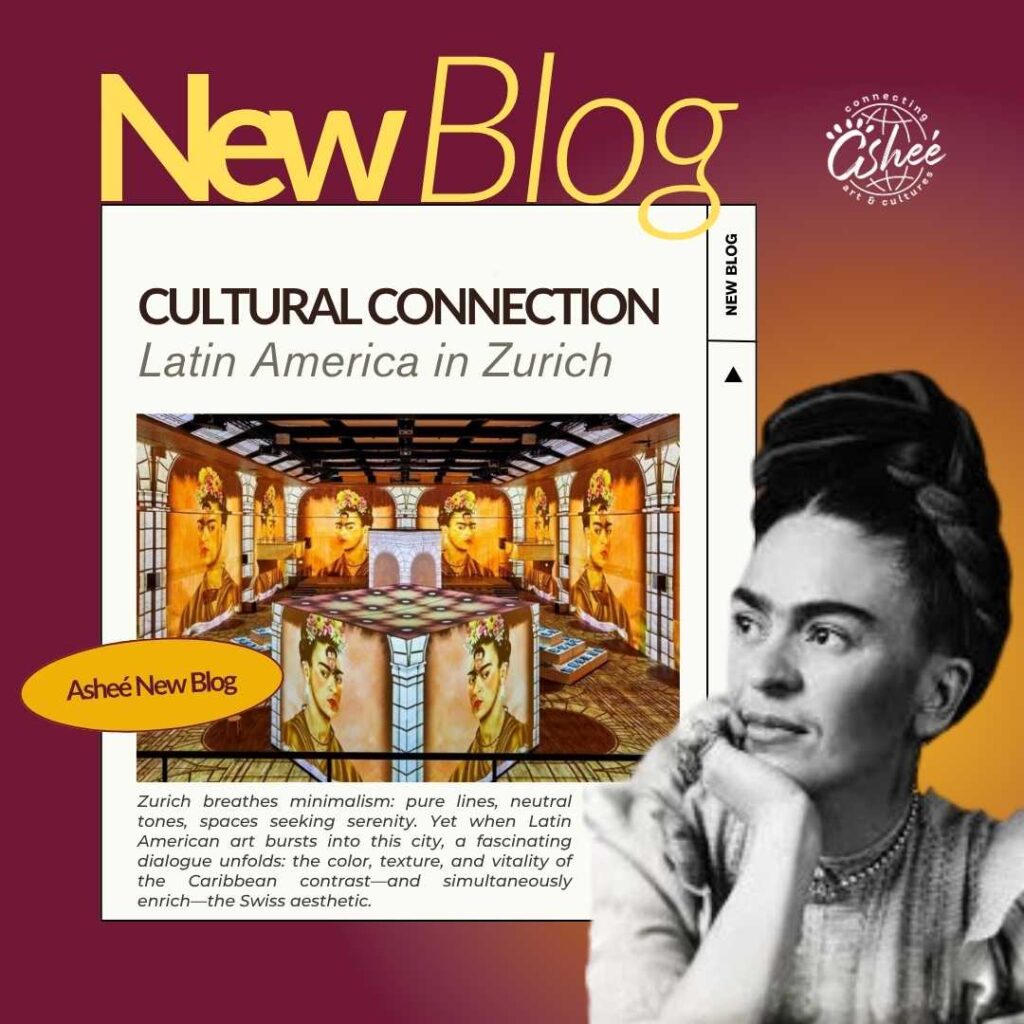
Cultural Connection Latin America in Zurich By Estela Ferrer Raveiro Asheé Gallery Zurich breathes minimalism: pure lines, neutral tones, spaces seeking serenity. Yet when Latin American art bursts into this city, a fascinating dialogue unfolds: the color, texture, and vitality of the Caribbean contrast—and simultaneously enrich—the Swiss aesthetic. The European eye faces a stimulating challenge: how does the chromatic intensity of a Caribbean piece coexist with the white, sober order of a Zurich gallery? What seems like opposition becomes complement. Swiss minimalism acts as the perfect canvas for Latin American art to unleash its power, inviting the viewer to step out of calm and into vibration. The Legacy of Frida Kahlo in Contemporary Art A clear example: the echo of Frida Kahlo in young artists. Her exploration of pain, identity, and the body continues to inspire, now reinterpreted through new Latin American lenses. Exhibited in Zurich, these works not only carry Frida’s memory but also highlight the universality of suffering and resilience—now engaging European audiences who find in them an unexpected mirror. Marcia SchvartzMi vida es un tango, 1994Oil on canvas.130 x 115 cm. Magali LaraNaturaleza Muerta, 1986Acrylic on canvas120 x 120 cm. Collector’s Guide: Modern and Contemporary Latin American Art Many collectors in Switzerland still feel uncertain when approaching Latin American art. Onekey is to recognize its stages: Modern: marked by the intersection of tradition and avant-garde, with figures likeWifredo Lam or Torres García. Contemporary: diverse, hybrid, deeply connected to current social and political debates. García. Understanding these nuances allows one to appreciate not only aesthetic beauty but also the cultural and symbolic weight of each piece. Language is also a bridge. Knowing terms like chromatism (Farbigkeit), engraving (Radierung), or installation (Installation) creates an immediate connection between cultures. Speaking about art in both languages is not just practical—it’s a gesture of respect and openness. The richness of Latin American art is not confined to geographic borders. In Zurich, its presence becomes a unique differentiator: a reminder that color, history, and memory can also inhabit the most minimalist spaces.

Sin categoría

The Creative Journey of Arianna Moreno

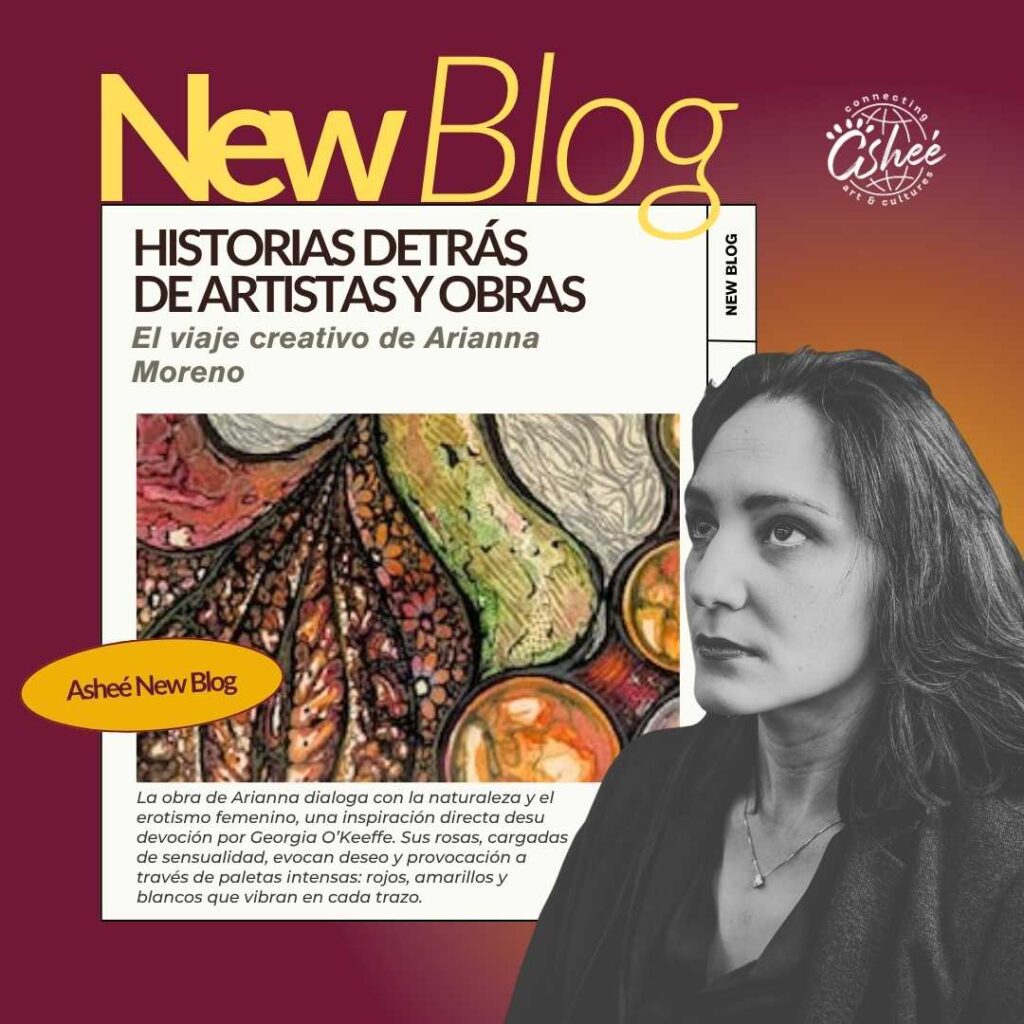
Stories Behind the Works and the Artists The Creative Journey of Arianna Moreno By Estela Ferrer Raveiro Artworks From the halls of the Instituto Superior de Arte —today the University of the Arts— to the classrooms of the San Alejandro Academy, Arianna Moreno (known in her early days as Nina Moreno) has traced a path of perseverance and passion. She graduated in 2009 from the Vicentina de la Torre Recio Academy of Art in Camagüey and in 2014 from ISA, where she studied under the influence of René Francisco’s performance workshop. Her trajectory has led her to explore a visceral, honest, and profoundly feminine art, with identity and memory as guiding threads Behind the Canvas: What Inspired This Work? Arianna’s work engages in dialogue with nature and feminine eroticism, a direct inspiration from her devotion to Georgia O’Keeffe. Her roses, charged with sensuality, evoke desire and provocation through intense palettes: reds, yellows, and whites vibrating in every brushstroke. But her vision extends beyond that: she also explores religion, memory, and the ever-rebuilt notion of home, especially from the experience of diaspora. Her painting thus becomes a space where the intimate and the collective coexist in harmony. What is something that never fails in your creative process? From a deeply intimate and personal space, I’d say the desire to create and to act; from a more reflective one, it would be the eternal return to the seed (my essence, who I am) along with the honesty and strength to confront my lights, shadows, and deepest darknesses. Which Latin American artist inspires you? There are truly many artists with whom I share a poetic affinity, but one of those I most admire is Carlos Enrique. His eroticism is an atmosphere that envelops the entire landscape, where desire and passion are elemental forces, embodying the passion of the tropics, eroticizing nature itself, and transforming it into a sexual symbol. His natural elements (animals and vegetation) allude to corporeal forms, the lines between body and environment blur, suggesting that desire is a natural and indomitable force of the Cuban land. If you weren’t painting, what would you be doing? I believe creation never stops. The daily confrontation with new challenges contributes to a kind of learning, a knowledge that develops, evolves, and ferments in order to fulfill the desire for creation in any subject, discipline, medium, language, or space. Each one, with its own personality and atmosphere, would provide me with the necessary tools to express myself artistically. How does motherhood influence your work? For me, motherhood is a creative act in itself. From a natural state of being-feeling-existing, it becomes a process of transformation on an emotional, personal, and vital level. It evolves transcendently in both mind and body, providing coherent and nourishing tools for the artistic work I continue to develop. A place in Latin America that connects with your art: When I begin to recall my past, I immediately merge with the memories of my childhood: the discovery of a wildflower, a strange bush my grandfather showed me that bore very sweet berries loved by animals, the first pitahaya I tasted from a massive oak tree, the lagoons I shared with the wildlife of that beautiful countryside where I grew up during holidays. Yes, undoubtedly, some of us are our childhood incarnate—into that place I long for, that little corner of happiness to which I wish to return one day. My beloved land is that place.

Scroll to Top